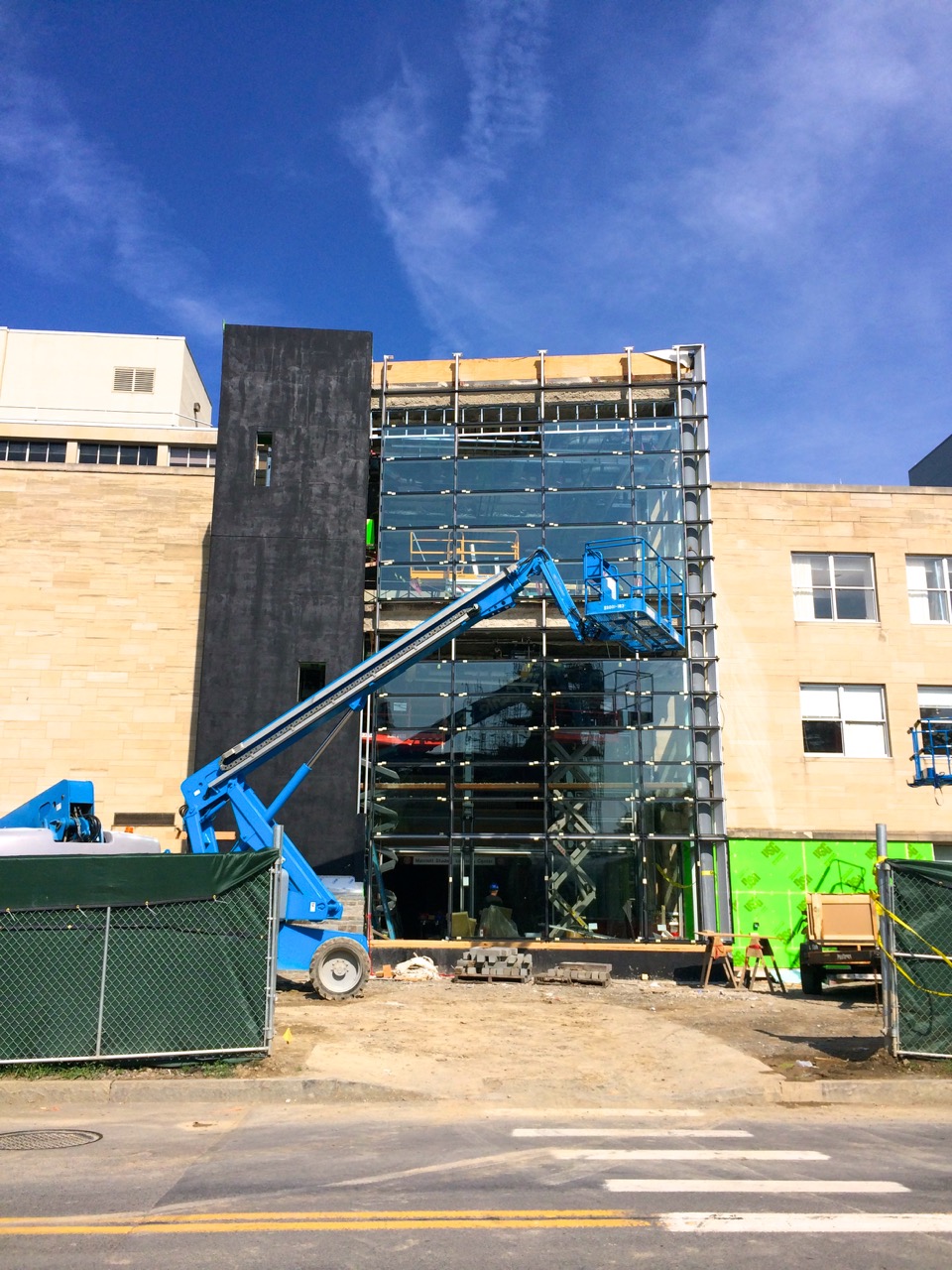
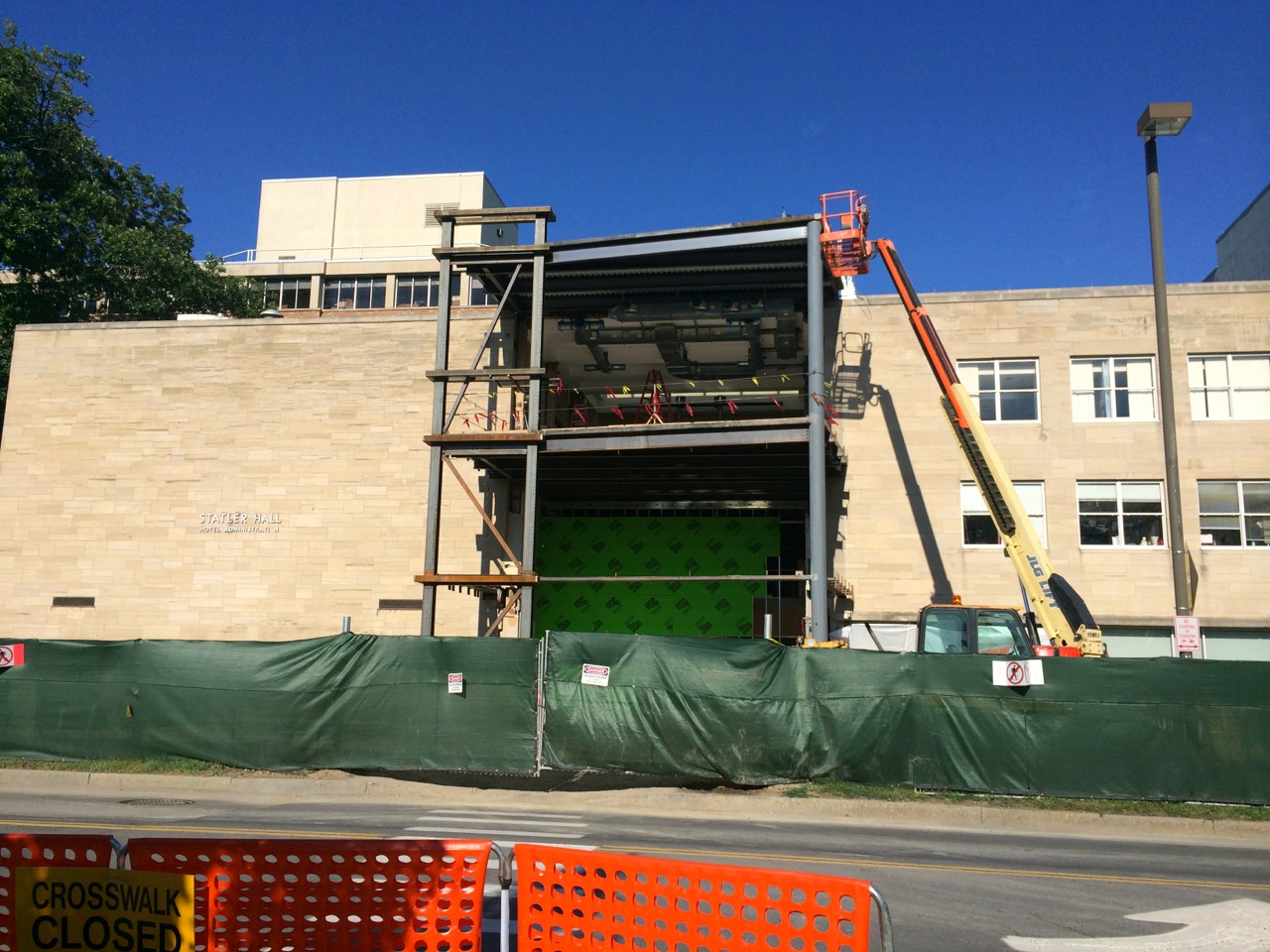
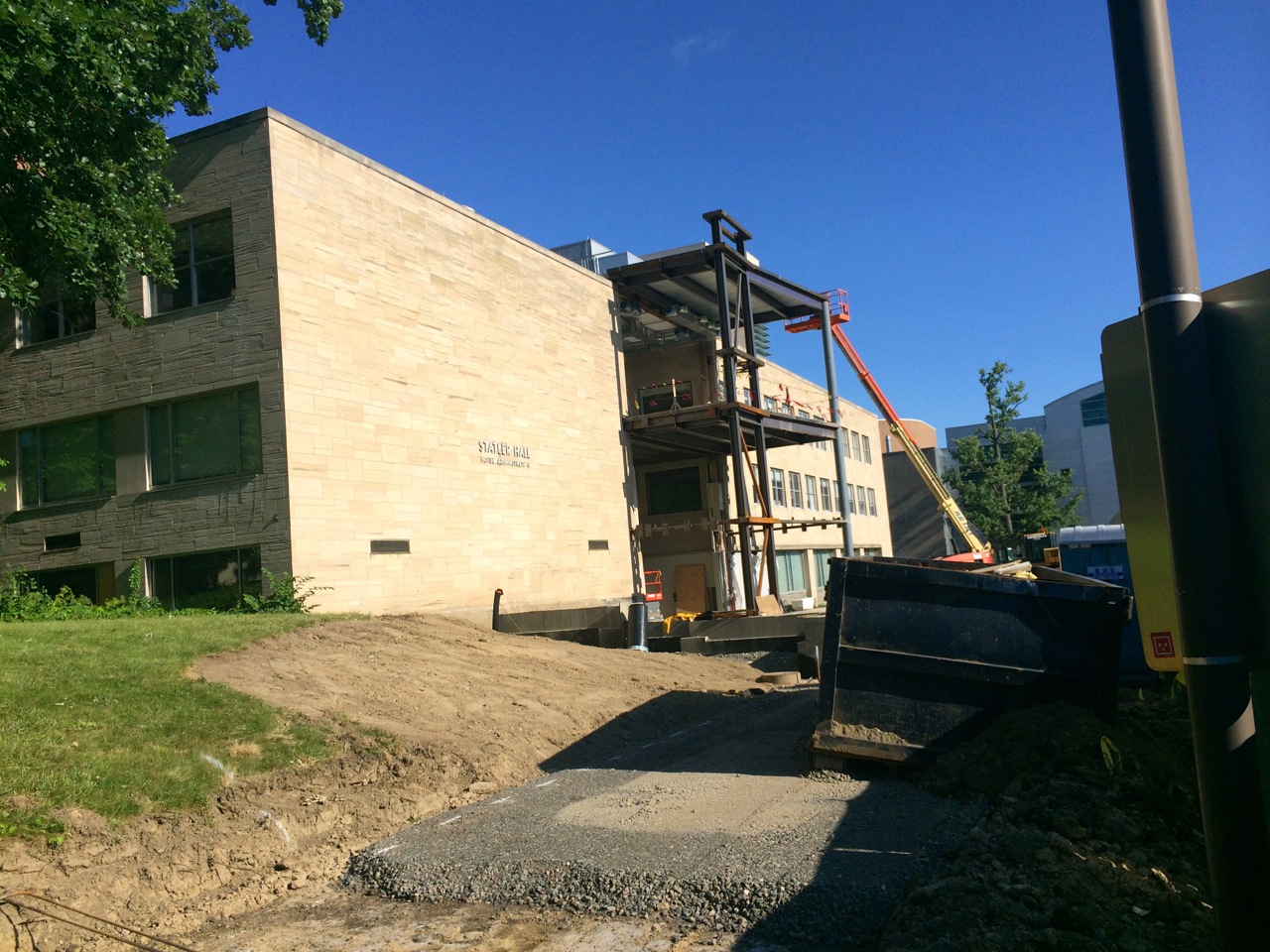
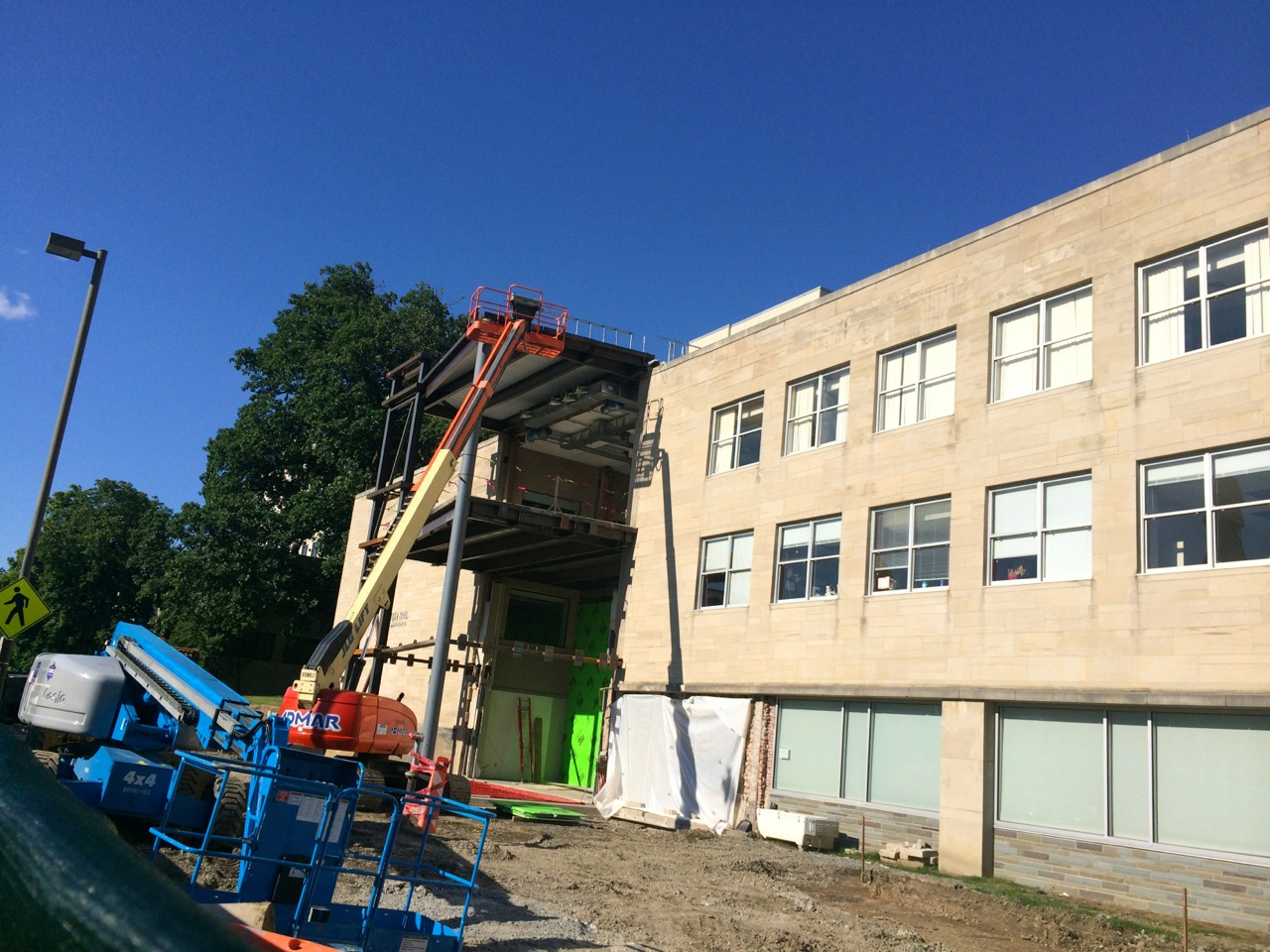
Updated photos here from August 3rd and August 6th for Cornell’s Statler Hall Entry Renovation project that has been going on this summer (infill project for a new 450 square foot vestibule and also second floor space above). At this pace, I’m sure a lot more has been done since the time this is posted: the exterior wall framing looks to have been completed by the end of July, along with fiberglass sheathing around the support wall and side wall. The interior shows rapid HVAC and electric installation, and the glass curtain wall has been assembled well beyond halfway in the span of about four days. Design by KSS Architects, and project being managed in-house by Cornell Facilities Services.
The second and third-story facade for the Lehigh Valley House is nearing completion, and the interior is currently being gutted and renovated for six condominium units on the upper floors (I believe only two remain to be sold), and a few commercial spaces on the ground floor. The previous lap wood siding was removed a couple months ago, and fiber cement siding and window trim has been hung and painted in its place. The building is owned by Tim Ciaschi, and is the former home of the Lehigh Valley House Restaurant (previously an Inn as well), which closed in 2010 after 113 years in business.
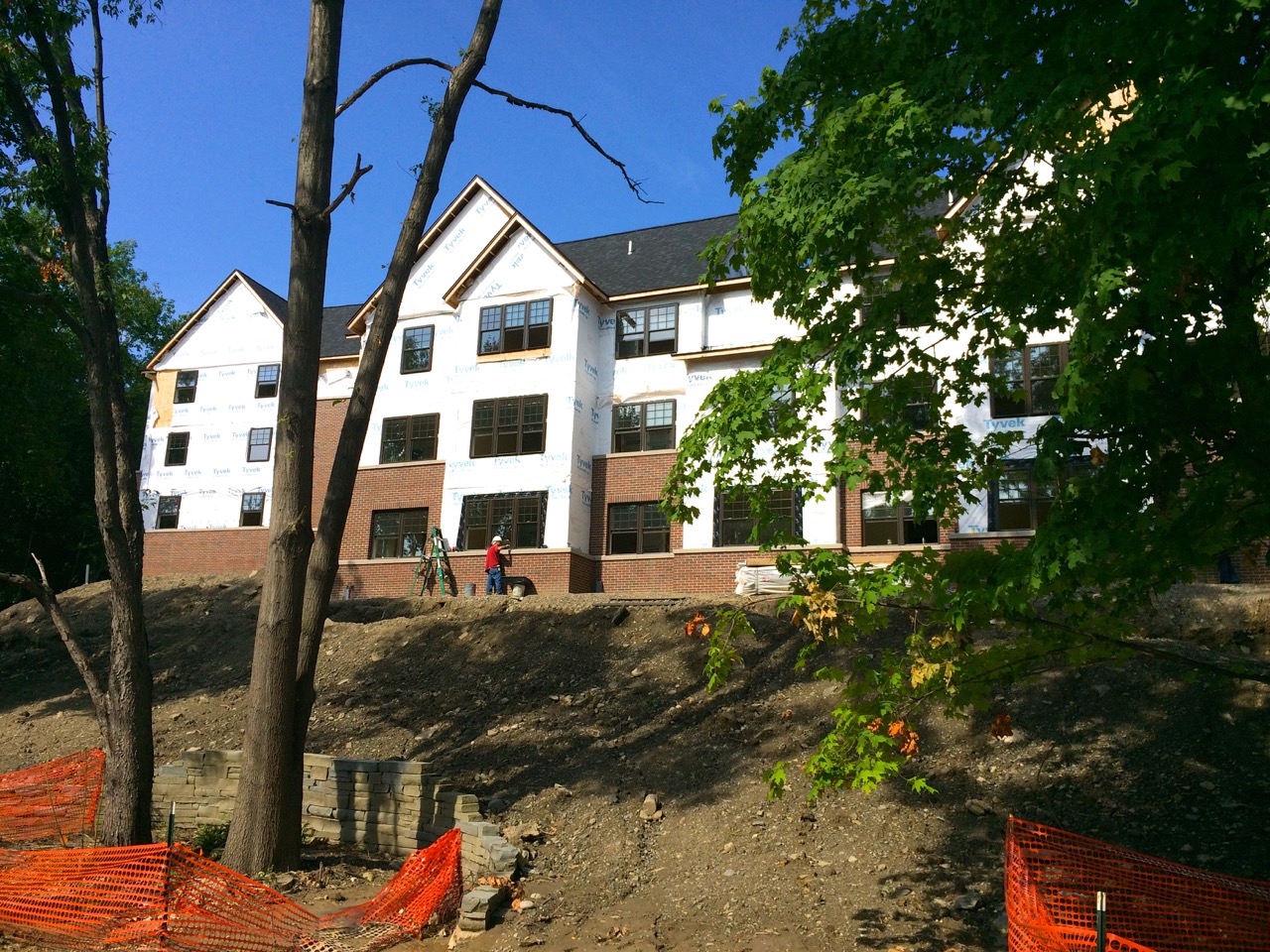
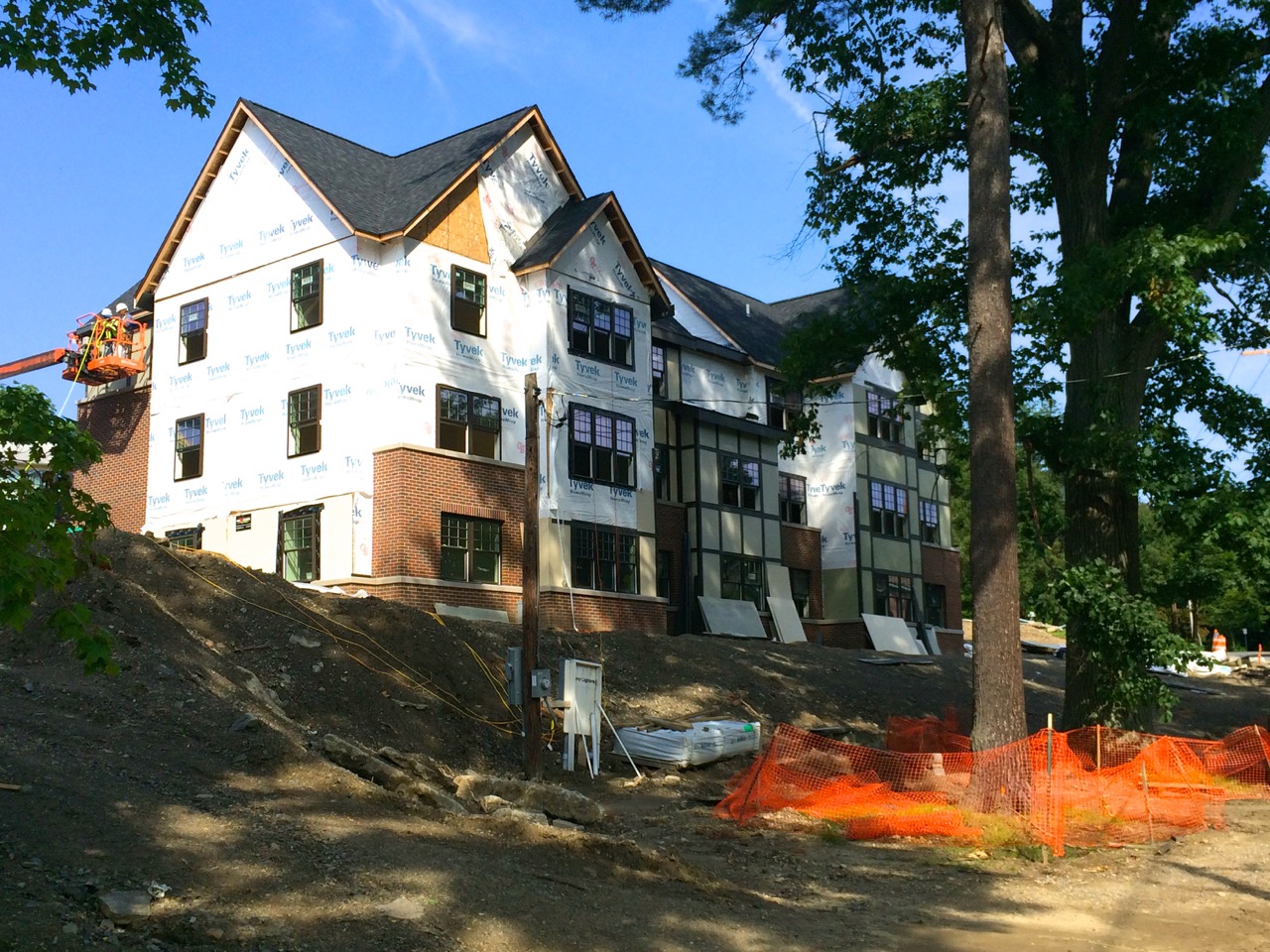
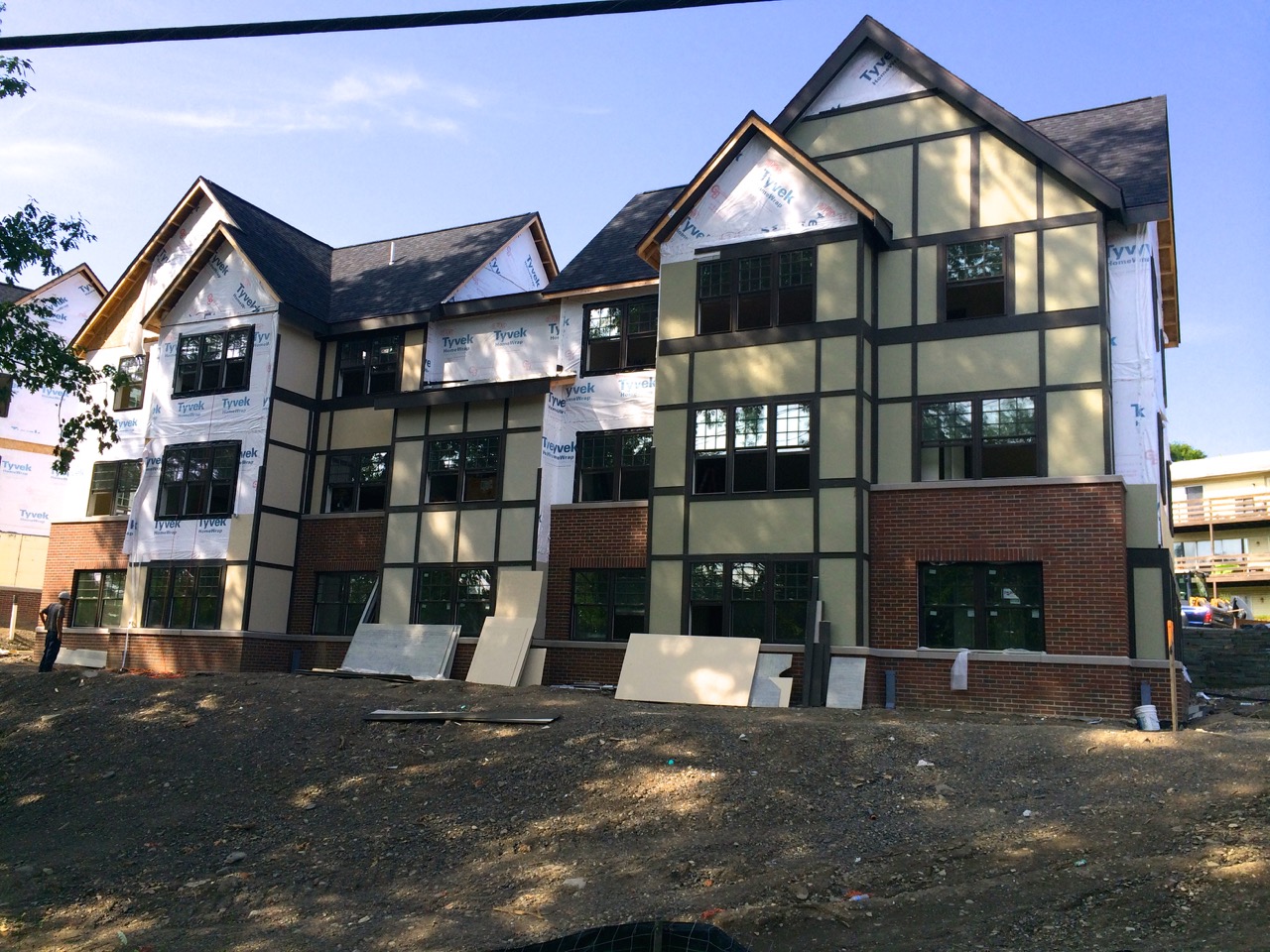
Photo update here for RABCO‘s 18-unit Thurston Ave Apartments project in Cornell Heights (taken August 3rd and 6th). The exterior facade is shaping-up, as Hardie Stucco Panels and Hardie Trim boards make their way up the three buildings, along with roof fascia boards and soffit panels at the roof edge. The curbing for the parking lot has been set, and looks ready for pouring stone base, then asphalt. The leasing indicated August start dates, so this project should be wrapped-up in the next two weeks to allow for student occupancy for this Fall semester.
Unchained Properties and the project team for the 95-acre Chain Works District (former Emerson site) held a second public meeting today (August 5th), primarily to discuss their approach to zoning and to give more information on proposed site layout. Mayor Myrick began the meeting by noting that the community involvement this early-on in a project bodes well for its development, and that the local economy is seeing some of the best numbers statewide as far as unemployment, job growth, and housing creation, so this project will inevitably become a major part of the change we should continue to see in the City.
Myrick and the project team explained the reasoning behind the developer’s decision to seek a Planned Development Zone (PDZ) in the Town of Ithaca, and a Planned Unit Development (PUD) in the City of Ithaca, since the parcel is split between City and Town. The PDZ and PUD are essentially the same thing: it’s a form of zoning and regulatory process that can be approved by the municipality in order to allow a project to develop outside of the current zoning on a parcel or set of parcels.
Scott Whitham of Whitham Planning and Design observed that since the current zoning for the Emerson parcel is Industrial, it would not be applicable or realistic to a large mixed-use redevelopment, as is being proposed, so the project team is submitting zoning materials to both the City and Town to consider in their PDZ and PUD processes, which carry the same requirements as a rezoning of any other area: the community has input and commentary in public meetings throughout the process, and the rezoning would fall under the requirements of the New York State Environmental Quality Review Act (SEQR), and review from the Tompkins County Planning Board. Once the zoning portion is complete, then the project team may submit Site Plan Review applications to the corresponding Planning Boards.
Craig Jensen of Chaintreuil | Jensen | Stark Architects summarized some items from the previous presentation: several buildings would likely be demolished to create open spaces between mixed-uses, and the design team is studying similar projects that have incorporated adaptive reuse practices on former industrial sites. The 1/2 mile distance to downtown (closer than Collegetown) will make non-automotive transportation options an attractive prospect.
In addition to working on the zoning proposal for this site, Noah Demarest of Stream Collaborative is working on combining the two Town and City Zoning Codes to conform with the Town Zoning & Comprehensive Plan and the forthcoming City of Ithaca Comprehensive Plan. The combination would be adapted into a Form-Based Zoning Code, with Transect Zones rather than the existing zones and codes we have today, which can be over-complicated and use-based, and contain more amended content than original content.
Transect and Form-based zoning seeks to establish allowable building massing as a priority over accepted uses, and emphasizes a logical transition from rural areas to urban centers, mimicking the transitions found in natural geography. More information is available from the Form-Based Codes Institute and the Center for Applied Transect Studies (which was founded by Andrés Duany and Elizabeth Plater-Zyberk, who wrote the first form-based code for the town of Seaside, Florida). The zoning code suggested here is adapted from SmartCode template, which is a Transect-based subset of form-based codes.
Transect-Based Zones are as follows: T1 (Natural) included in project, T2 (Rural) not included, T3 (Neighborhood Edge Zone) not included, T4 (Neighborhood General Zone) included in project, T5 (Neighborhood Center Zone) included in project, T6 (Central Business District Zone) not included.
The existing topography affects these zone decisions: a 15% or greater slope is not realistically developable, so there are several areas, especially towards the south end of the site that would not be developed.
The question and answer session brought-up traffic concerns on surrounding streets. The Project Team has employed Steve Ferranti of SRF Associates to study the current and historic traffic and transportation patterns, along with trip generation estimates based on the proposal as part of the SEQR process. The team noted that mixed-use projects generally have different peak patterns than single-use, which should help with congestion. Concerns about environmental remediation and removal needs surfaced, which will be studied in detail by the team’s environmental consultant LaBella Associates throughout the same SEQR process, in both rezoning and site plan review. The response from the public was again, quite positive overall.
Agora Development‘s 29-home Belle Sherman Cottages project has seen strong sales throughout the winter and this year, and Carina Construction has been working away at new foundations, Simplex modular placements and finish work for four lots since early this year. Lots 4 and 6 are being completed as Lot 18’s foundation awaits four Craftsman-style modular pieces to be delivered and craned into place.
The four pieces are set, levelled and fitted together with steel plates all in one day, then the custom interior work begins (fixtures, finishes, flooring, etc.), along with porch-framing, siding, backfilling the foundation, and landscaping. It shouldn’t be long now until the development really fills-in: three homes remain, plus the two rows of townhouses, which will be constructed once enough sales accrue.
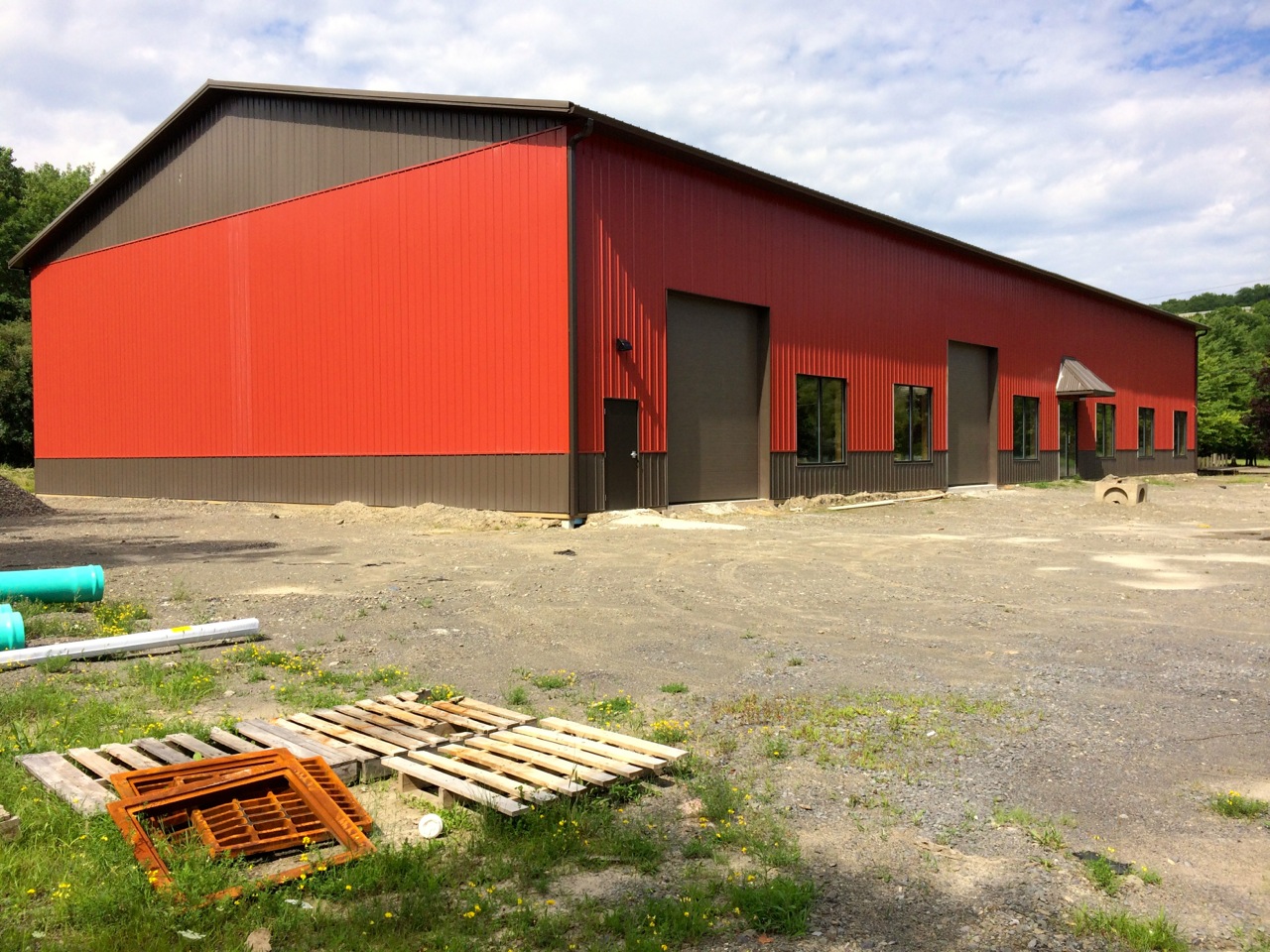
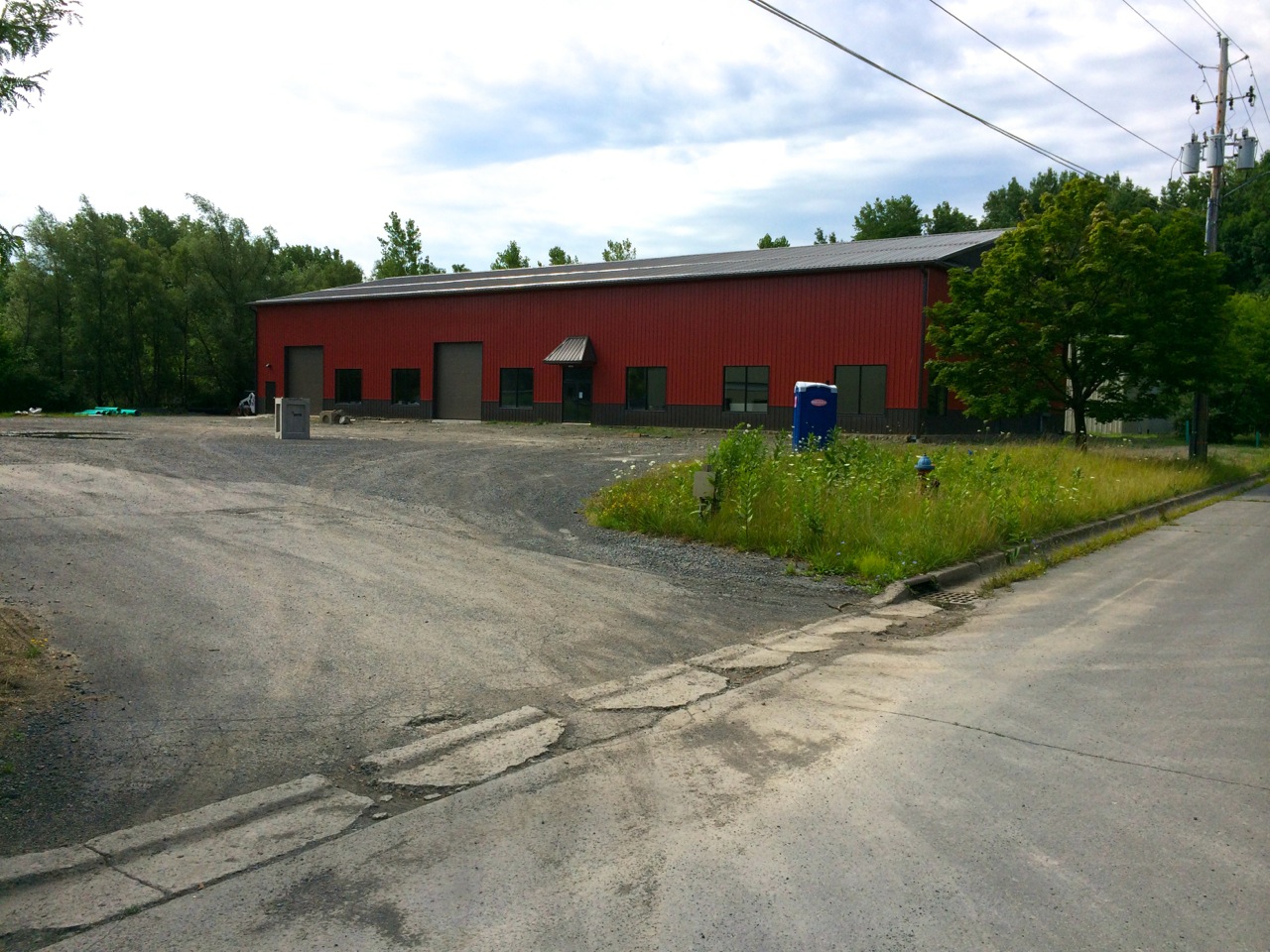
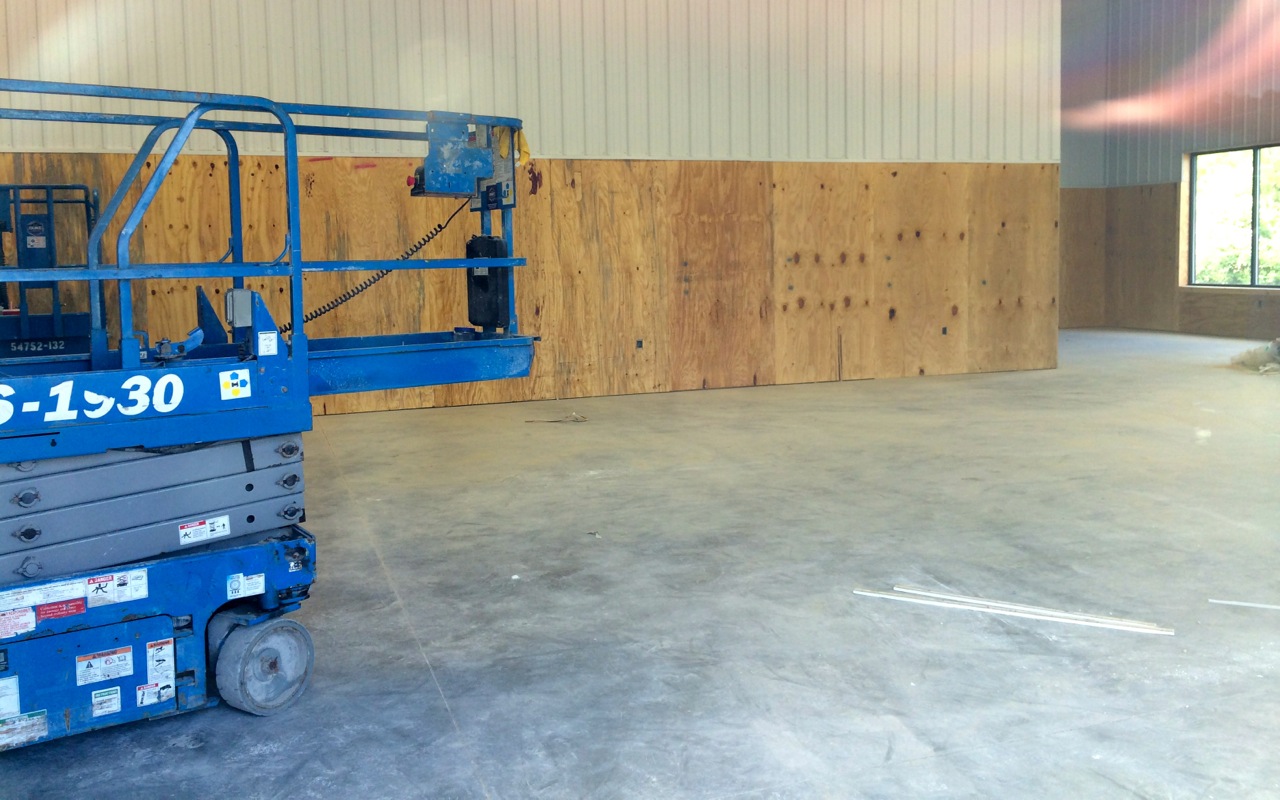
The post-frame CrossFit Pallas project on Cherry Street being constructed by Fingerlakes Construction looks wrapped-up on the exterior (minus parking lot and landscaping), and the interior is fully-framed out and covered with metal panels on the ceiling, and a combination of metal panels, drywall and plywood sheathing for the walls (perhaps for securing padded panels). The open-ended ducts running along the ceiling will probably be fitted with diffusers, but besides remaining drywall, fixtures and finishes, the building itself looks rather complete.
Cornell’s Statler Hall has been in the midst of an entry renovation project on the western side of the building, and throughout the month of July, the steel columns have been set on the foundation footings, and the steel beams, joists, corrugated metal decking, partial exterior wall frame, and partial HVAC system has been assembled. There’s also some framing work on the ground floor interior, where the new vestibule will meet the partially-renovated lobby area, which is being built back-up with concrete slab-on-grade and existing radiant floor heating. The lighting, mechanical systems, and most finishes will be entirely new, but certain aspects of the interior and exterior are intended to match existing, like the bluestone floor tiles, veneer and limestone veneer panels. The curtain wall and metal awning suspended by steel cords reflects the design of the more recent Beck Center and Tower Renovation, also designed by KSS Architects.
The Cayuga Inlet got its major start with the 1819 launch of the Cayuga Steamboat Company’s first ship (The Enterprise), then the 1825 completion of the Erie Canal, which connected to Cayuga Lake by another canal. This gave Ithaca waterway access to Chicago and the Atlantic. The Ithaca-Owego Railroad opened in 1834, with a line going to the Susquehanna and Southern Tier. The Cayuga Inlet provided a water-to-rail-to-land and vice-versa loading point, but Ithaca never took off as a major shipping hub for a variety of reasons which included financial Depressions, the difficult surrounding terrain, and further construction of major railways to the south- most importantly, Binghamton. (Snodderly, Ithaca and its Past)
The architectural style of harbor and waterfront buildings are taken into full account in the design here, which blends aspects of traditional industrial freight/warehouse buildings and modern techniques to connect occupants to the waterfront. Skylight and louver-style roofs are iconic of harbor warehouse and freight buildings, in order to gain sunlight, but also natural ventilation for large enclosed spaces (although I believe the angled racks are for solar panels- creating the same visual effect). Many residential waterfront projects include large bay windows, terraces facing the water, and an immediate area to access the waterfront, all of which are here. There’s even a four-seasons greenhouse planned for the fourth floor.
Design references and inspiration:
Rendered Elevation with material selections and architectural features of buildings nearby:
The material selections look respectful to context, and the rendered elevation helps to show how they fit together within the design: wood siding on the roof level, possibly slate or dark metal standing seam roofing, lap siding for the second and third floors, and a brick veneer with stone base on the ground level. The vertically-oriented siding and multi-level windows on the stairwells also draw a nice visual interest. Hope to see this one move forward- it would probably be the first new, primarily residential building of this size on the inlet since, well, ever. I’m not sure if these would be for rental or condominium, but Ithaca’s West End has been seeing some very nice projects as of late.
Bloomfield/Schon + Partners‘ 45-unit, 49,244 gross square-foot Cayuga Place Residences Project has been moving full steam ahead with core concrete block work in the last few weeks, and looks on-pace for the final 7th story this week or early next. The foundation was finished-up in late June, which included foundation footers supported by steel auger micropiles.
The project will be joining Breckenridge Place (50 apartments) and Seneca Way (office space plus 38 apartments) as recently completed downtown projects.
As reported by Ithacating and the Ithaca Voice, Jason Fane, property developer and owner of Ithaca Renting and The Fane Organization presented a sketch plan proposal at the last City of Ithaca Planning Board meeting to build a 12-story building on his parcel at the corner of College Avenue and Dryden Road (former home to the Green Cafe). The plans show a 12-story L-shaped structure with three ground floor retail spaces, a stairwell/elevator core, circulation layout, and apartments adjacent to Collegetown Center, a 6-story mixed-use building owned by Mr. Fane and managed by Ithaca Renting. The plans were done by Architect Jagat P. Sharma. In addition to Ithaca, The Fane Organization owns property in Harlem, NY, and is developing a 47-storey condo tower in Toronto, Chaz Yorkville (latest construction update with photos here).
The current zoning of the parcel is MU-2, which carries a height restriction of 80 feet at 6 stories maximum, so the proposal would need to seek and be approved for a zoning variance to build higher than current zoning allows.