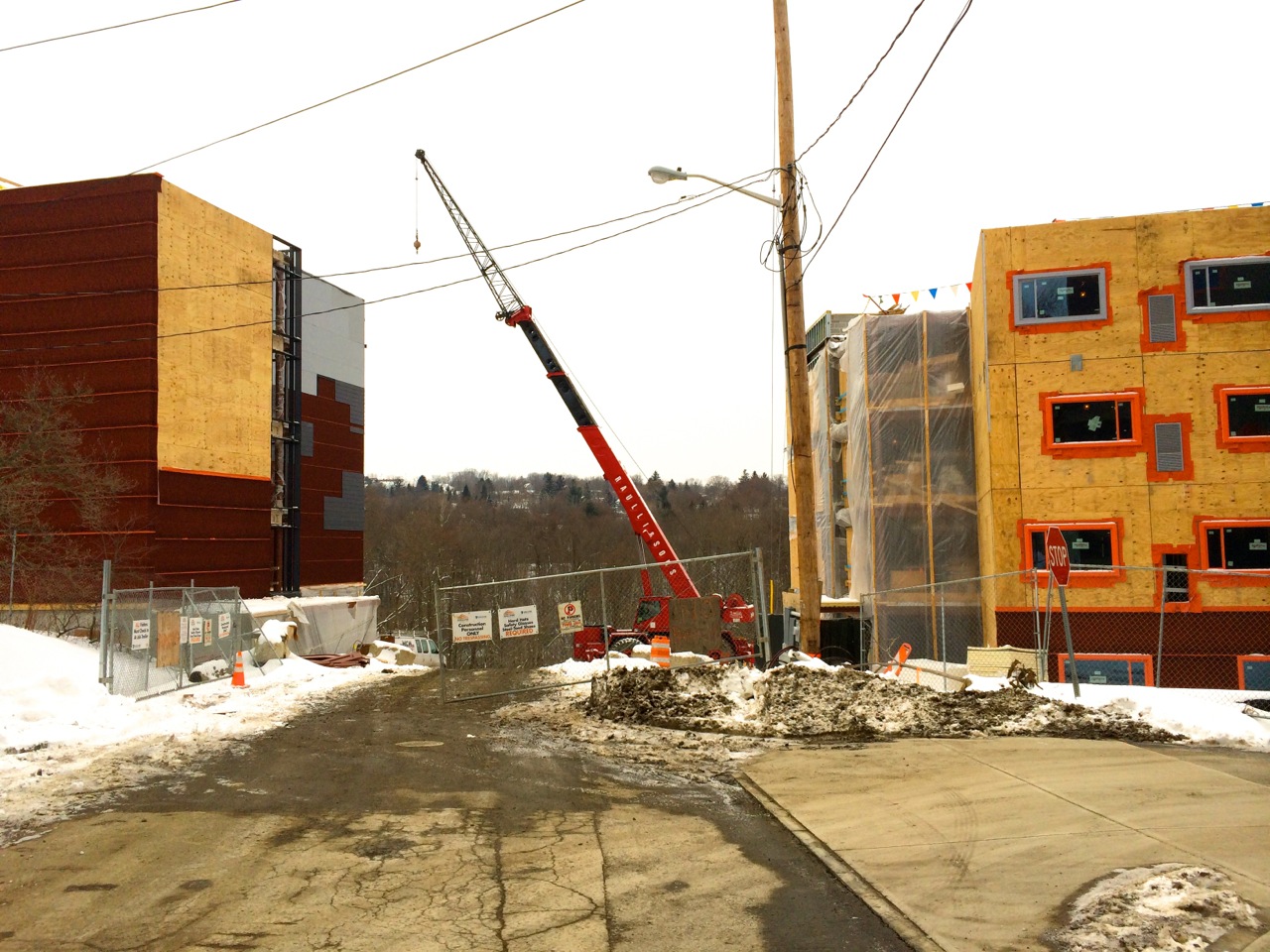
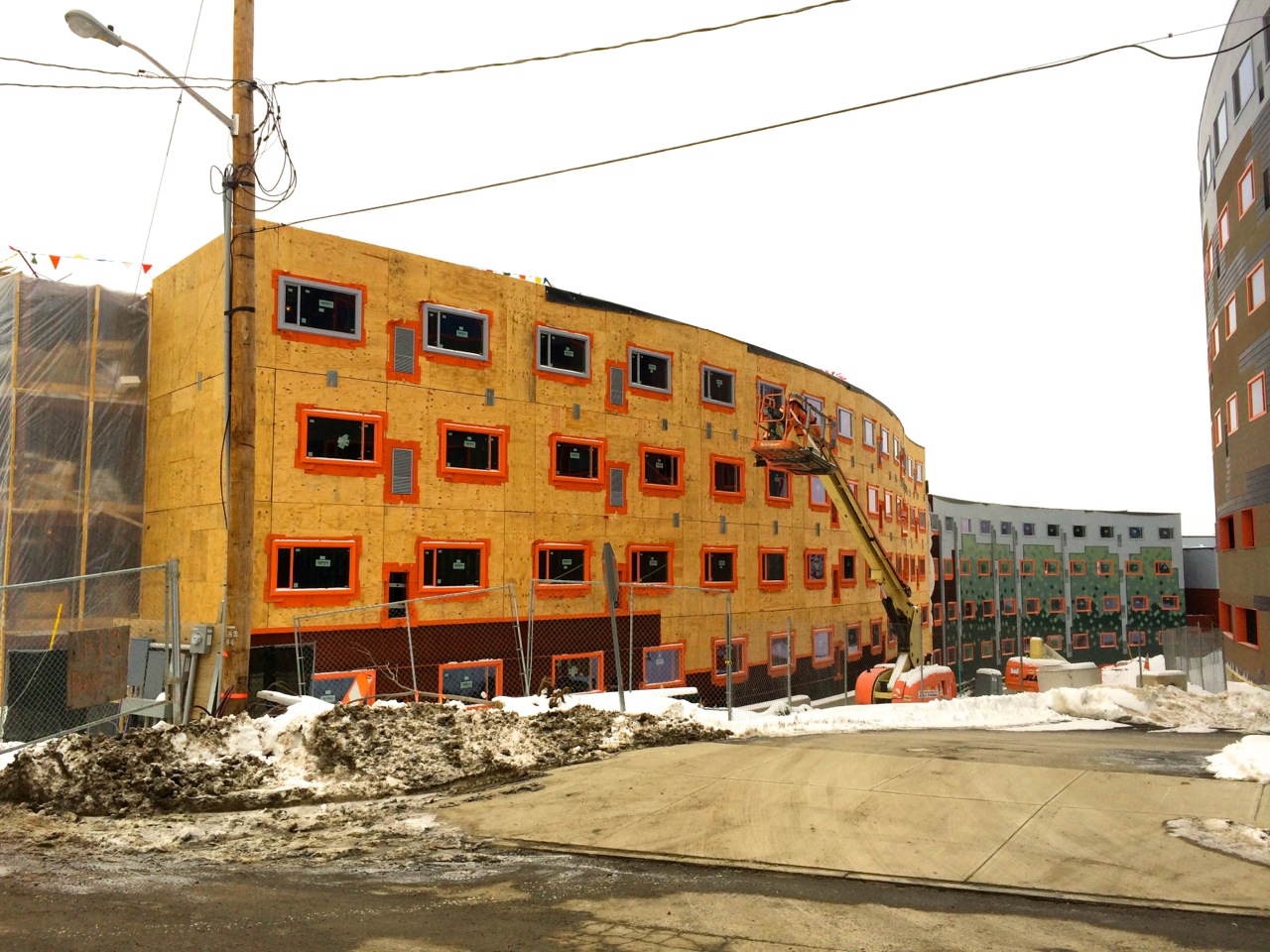
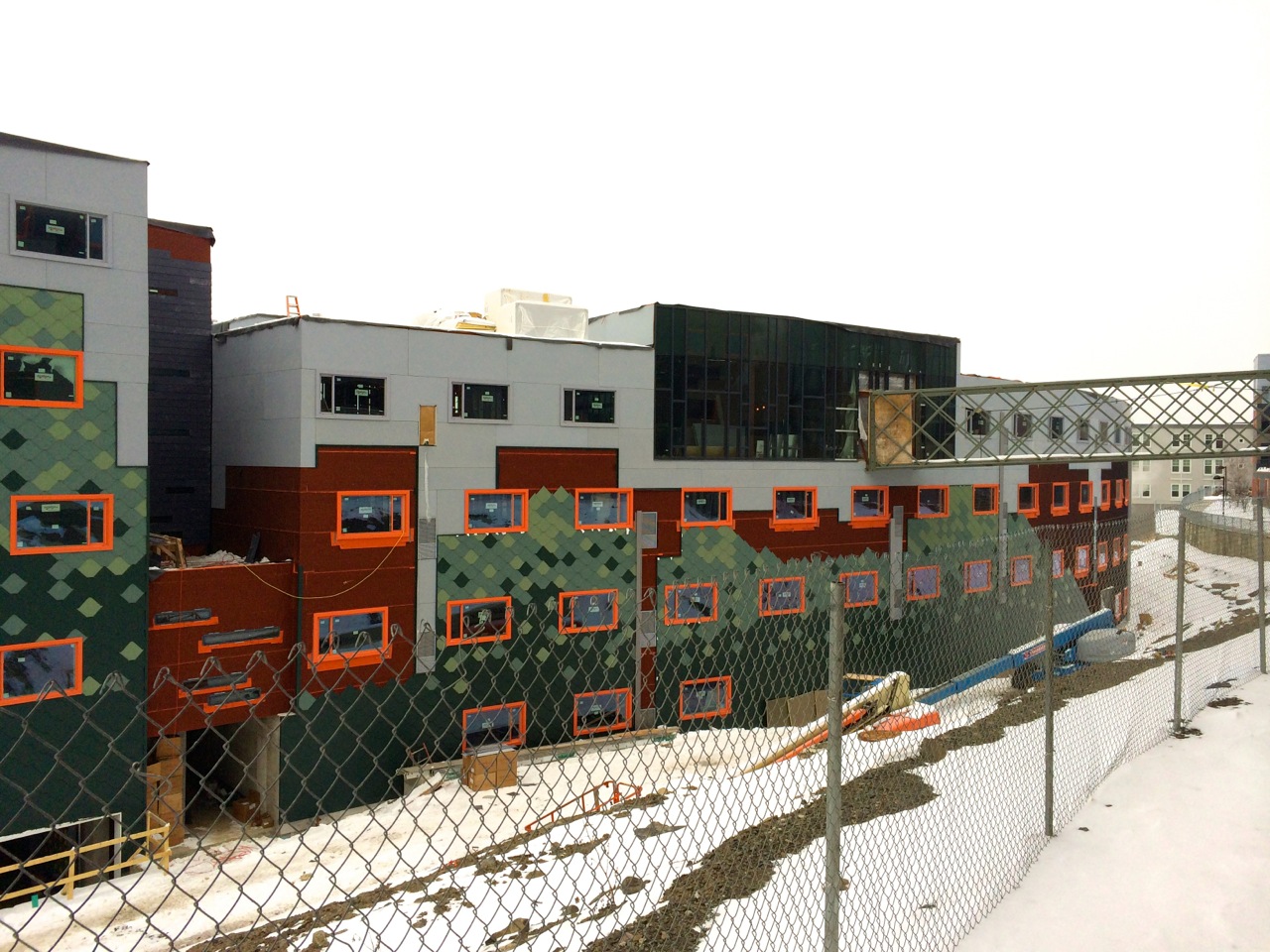
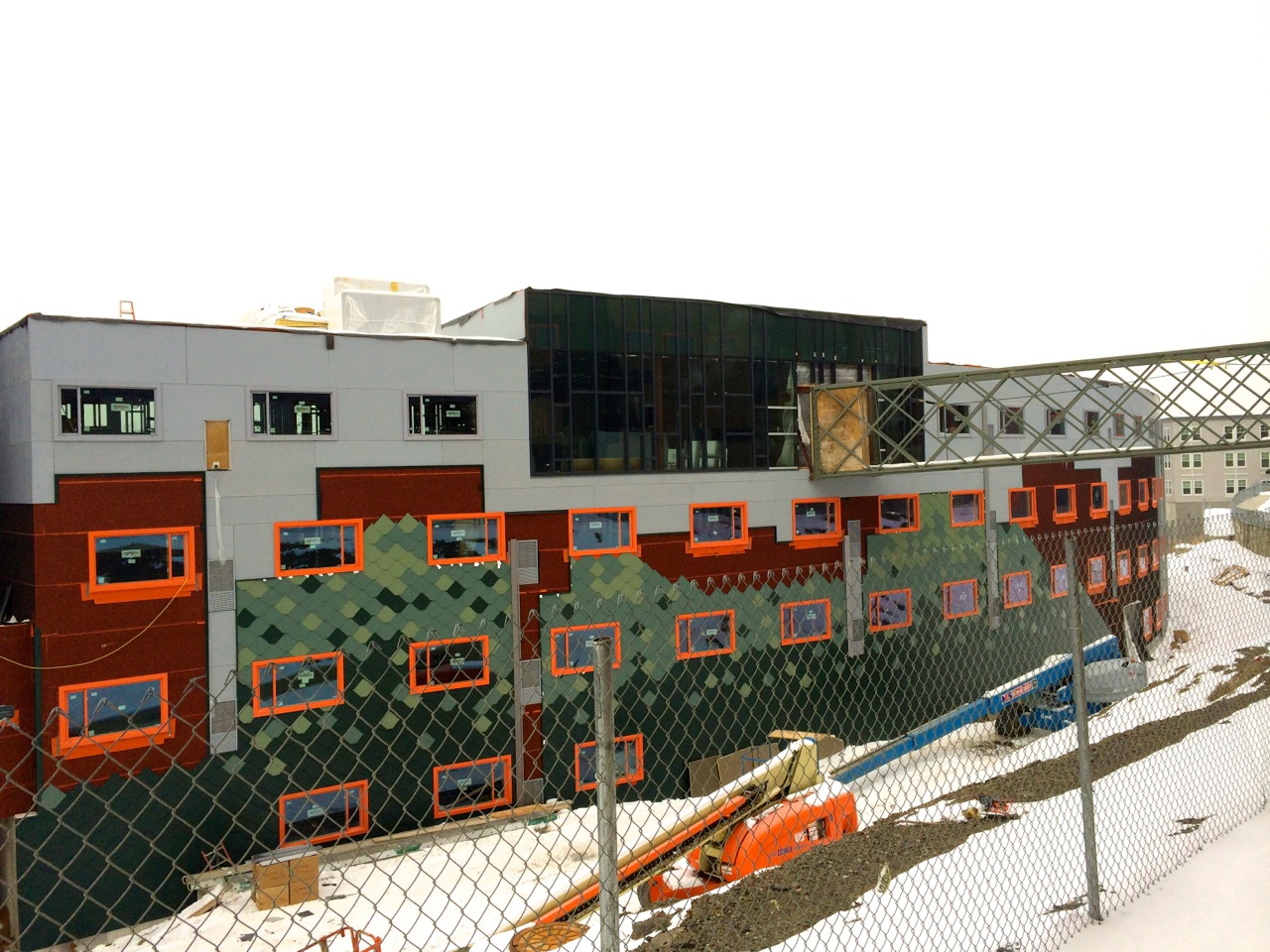
A retailer has been set for one of the Press Bay Alley spaces, and it’s Ithaca’s Boxy Bikes, a company that makes custom electric bicycles. They contain a battery, a motor, and are plugged-in at night to charge. “E-bikes” as they’re called, are generally intended as a biking aid, to help climb hills and steep inclines, or for transporting cargo. A couple articles, one last September and another in 2011 noted that E-Bikes are gaining considerable popularity, especially in Europe, where now in the Netherlands (legitimately described as the Western bike capital of the world), every one in six bikes sold is an E-bike. China is an established exporter, as well as having its own strong E-bike market. High-end finished factory models can be quite expensive, so there’s ample room for customizers and DIY-ers. The move-in for Boxy Bikes should be sometime this Spring.
Press Bay Alley: Retailer “Boxy Bikes”
February 19, 2014 // by Jason Henderson
Longest Night Solstice Towers Project Update: Early to Mid-February
February 19, 2014 // by Jason Henderson
Architect John Barradas‘ Longest Night Solstice Towers Project had tower two (or “thing two” as John and Ciappa & Marinelli Builders like to call it) nearly framed to its top out height when I came by for a look this past Friday, February 14th. Tower one’s electrical rough-in is coming close to completion (the wiring job looks very nice), and it’s quite an interesting sight at night with the lights on.
The pictures from February 14th (at the end) contain shots inside tower one and two- tower two’s layout is slightly different (accommodating the elevated path and entry at a different orientation for example), but the functions are the same on each floor- kitchen/living on ground, two separated bedrooms on second, master bedroom and bath on third, and a laundry and storage area on roof level with a terrace.
Tower two has a distinctly different feel being closer to the sidewalk and street, and the view is altered now from inside tower one, however, what I find most interesting about this project is the way in which concepts in other forms of art synthesize within the design. Architecture is a difficult art form since the end result must serve specific functions and be able to accommodate different living and/or working preferences, so it’s fascinating seeing it pulled-off like this. A door is an opening, a window is an opening: the openings are intended to lose the sense of what you would call “the middle ground” of a perspective, a term commonly used in photography and painting. John uses Edward Hopper‘s “Rooms by the Sea” (1951) as a reference, where the open door goes straight to the sea, with nothing in view in between, which is the design intention of using doors on each level.
Another theme is an idea coined by Colin Rowe, in his phrase “grid, frame, lattice.” It’s a way of thinking about the built environment as parts of a whole, in the geometric interpretation. We have a city “grid,” we have individual lots with buildings, our “frame,” and within that frame we have “lattice”: the joists that make up the flooring, the studs that form the walls, the structural elements that form the building. Downtown Ithaca is our grid, the square footprint, symmetry, and situating of the towers represent the intended frame, the floor joists will be left exposed to reveal the lattice, the fencing around the frame is a lattice, the vertical strips on the outside are a lattice, etc.. Architects have a term, “parti,” which is meant to describe the root idea or inspiration of a design, and I never fully understood what that meant until I came across this project.
February 7th:
February 9th:
Around February 11th:
February 14th:
Thurston Ave Apartments Block Work
February 18, 2014 // by Jason Henderson
The RABCO Thurston Ave Apartments project has begun wall assembly work for the ground stories of Buildings 1, 2 and 3, as the foundations were dug, formed, and poured over the course of late November to early February. As corrected in the previous post, this project is obviously going to be framed on-site, rather than modular, which comes as a surprise to me, since the floor layouts have the dimensions for truck transport, and would lend themselves quite well to that form of assembly. Also, given the timeline (leased for August occupancy), this may be cutting it close, but I imagine with a big enough crew, this can get done.
The walls are being constructed with Fox Blocks, which are an insulated concrete form (ICF) product made of recycled plastic. The walls are assembled block-by-block on top of the foundation walls, then concrete is poured on the inside gap. The tarps on top are covering the gaps so that snow doesn’t make its way in there.


Carey Building IV: More Demolition Photos
February 18, 2014 // by Jason Henderson
Here are some more photos, taken near the end of last week, when the remainder of the walls had been demolished. The old plaster ceiling is coming out these next few days, so I’ll post photos of that later on this week and next. One of the interior (formerly an exterior, see photo of piece below) walls was a combination of cinder block, then terra cotta block, with steel rebar rods run all the way through, then filled with concrete- I guess with older buildings, you never really know what you’re going to run into. The concrete has been quite a challenge as well; it’s probably 5,000 to 7,000 PSI based on how it has behaved with a power chisel. Most foundation, slab, and wall concrete mixes are now typically in the range of 3,000 to 5,000 PSI, so the pours done here in 1922 are probably portland cement with a coarse stone aggregate, which is commonly used for applications where the concrete is exposed to freeze-thaw cycles, so in this case, it would make sense for the exterior walls and structural elements.
Interesting fact- the concrete mix for One World Trade Center’s supporting columns and walls (the building has a central concrete tower, like a vertical bunker) was invented solely for the project, and the higher-range pours have a tested strength of 14,000 PSI.
Seneca Way Interior Photos & Apartments
February 17, 2014 // by Jason Henderson
Seneca Way Apartments hosted a tour last Thursday evening, and I had the opportunity to take some photos of a one bedroom that has been furnished for a model, and a two bedroom unit. Representatives from CSP Management (the building managers) and Newman Development Group explained the features of the building, answered questions, and showed a large crowd around the new building.
The finishes are quite nice, and the units themselves are well laid out, and very modern. The kitchens feature Corian countertops, solid cabinetry, stainless steel Whirlpool appliances, and each unit has its own Whirlpool Duet washer & dryer. The living rooms are all adjacent to the kitchen, with a bar counter in between, and pendant lighting. Some of the bathrooms appear to be ADA-adaptable, with low clearances for entries, and toilets far enough from the wall to install the proper sizing and clearances for grab bars. All bathroom floors are tile, and shower units are fiberglass. The master bedrooms in each two bedroom unit (types C & D) have large walk-in closets, and a private bath off the bedroom.
Warren Real Estate‘s new offices look completed, and by the end of this month, the Park Foundation will begin moving-in.

Floor plans from Seneca Way’s website:

Breckenridge Place Finished Exterior Photos
February 13, 2014 // by Jason Henderson
Well, it’s been a real treat watching this 50-unit, 60,000 square foot project go up a stones throw from where I live, and I think it’s a great addition to downtown. Ithaca Neighborhood Housing Services has pulled off a large, mixed-income affordable housing project in the middle of downtown, desperately needed to fulfill housing demands that go well beyond the existing stock and availability of housing units in Ithaca, so hats off to them for making this a reality. Affordable housing developments in close proximity to downtowns and civic institutions offer residents easier access to local resources, and mixed-income developments have been associated with tangible benefits for residents beyond providing affordable housing. [The Director of INHS, Paul Mazzarella, gave a nice short presentation to the City Planning Committee last night on housing trends and needs in the area, so I’ll post the link and content once it’s available]
I have yet to peek inside, but INHS has some interior shots on their website, and the video on YouTube offers nice explanations of the finishes and amenities. The project was designed by HOLT Architects, and completed by Christa Construction.
Gates Hall Move-ins Begun & Lobby Photos
February 12, 2014 // by Jason Henderson
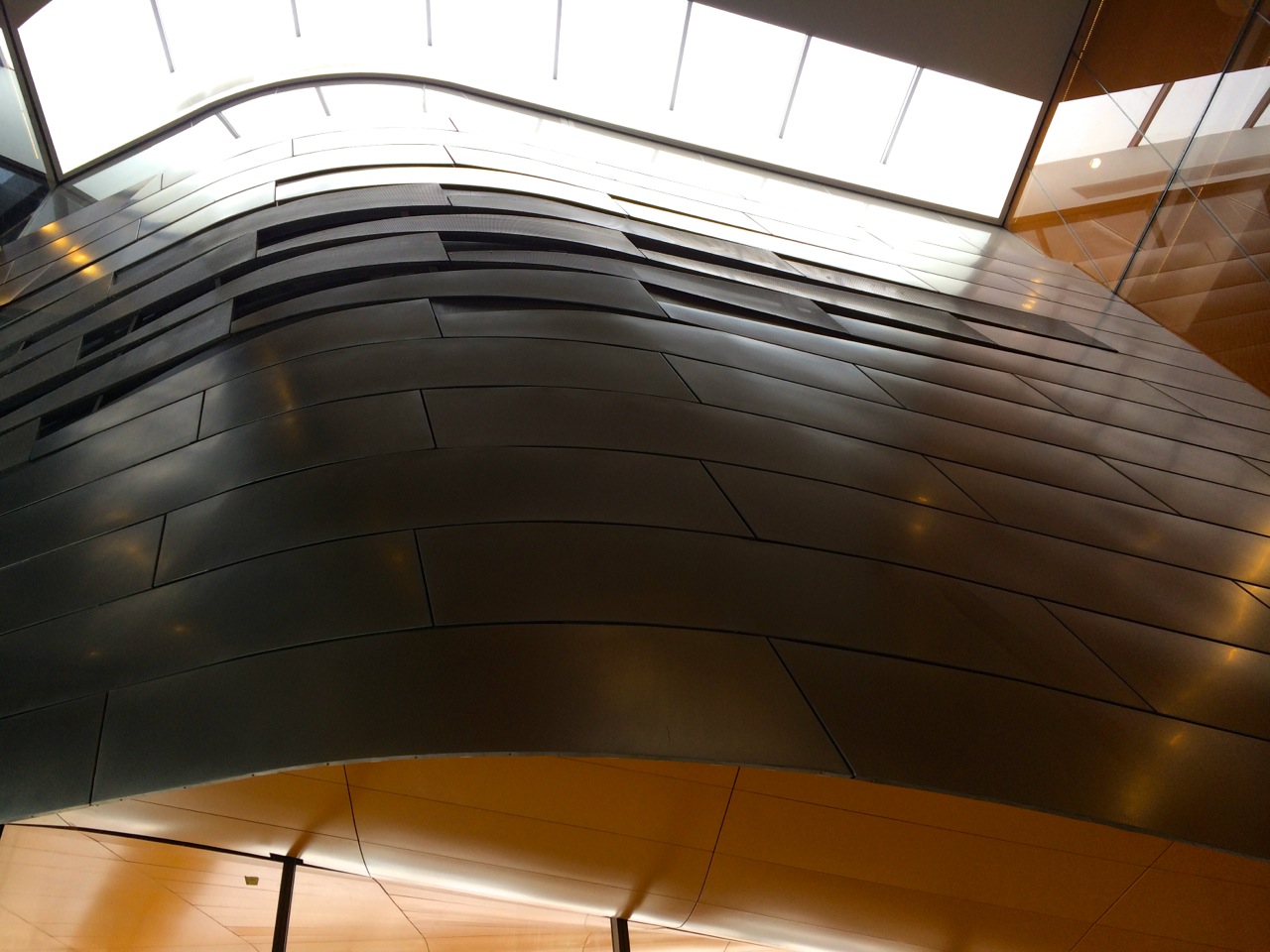
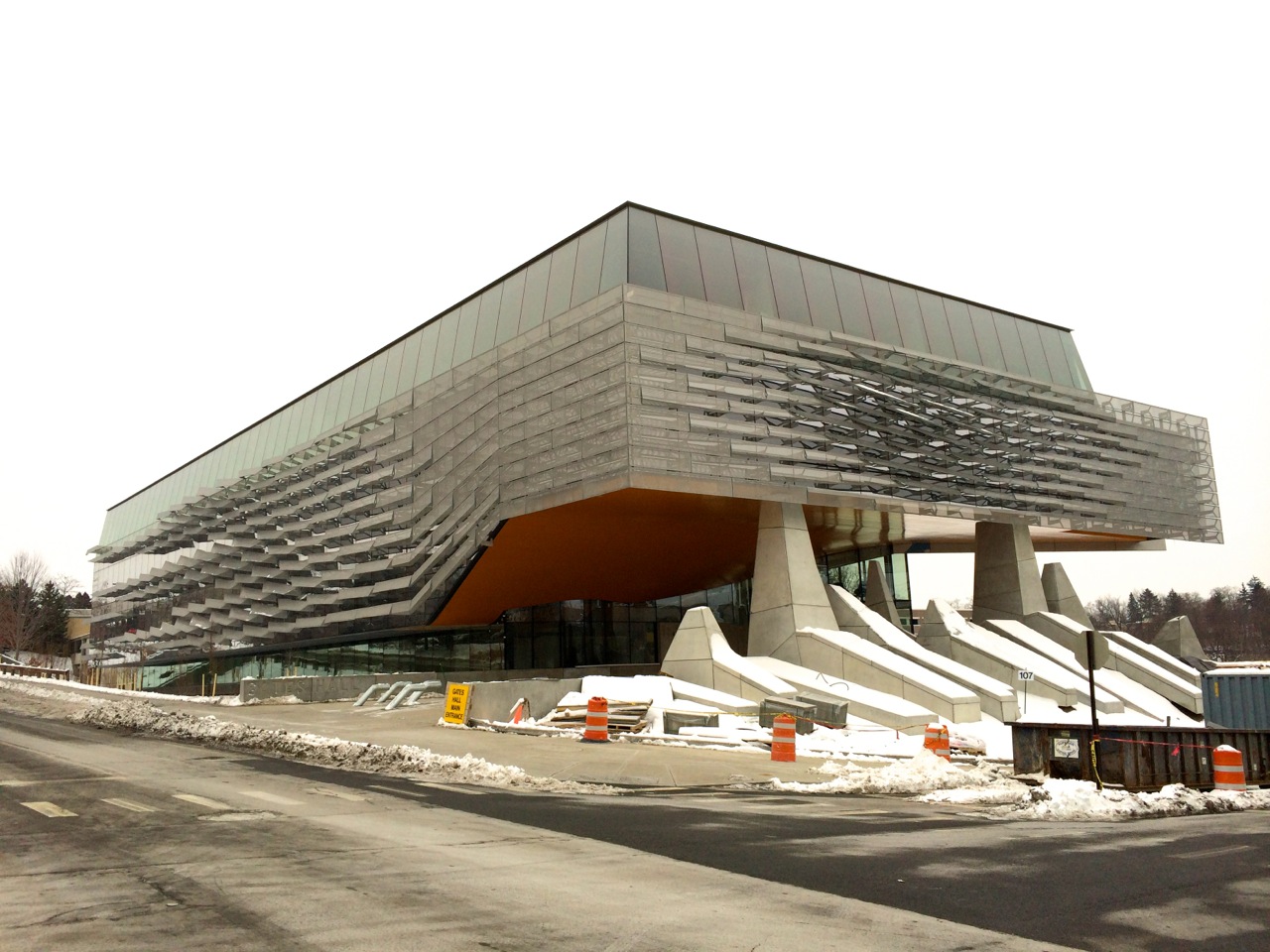
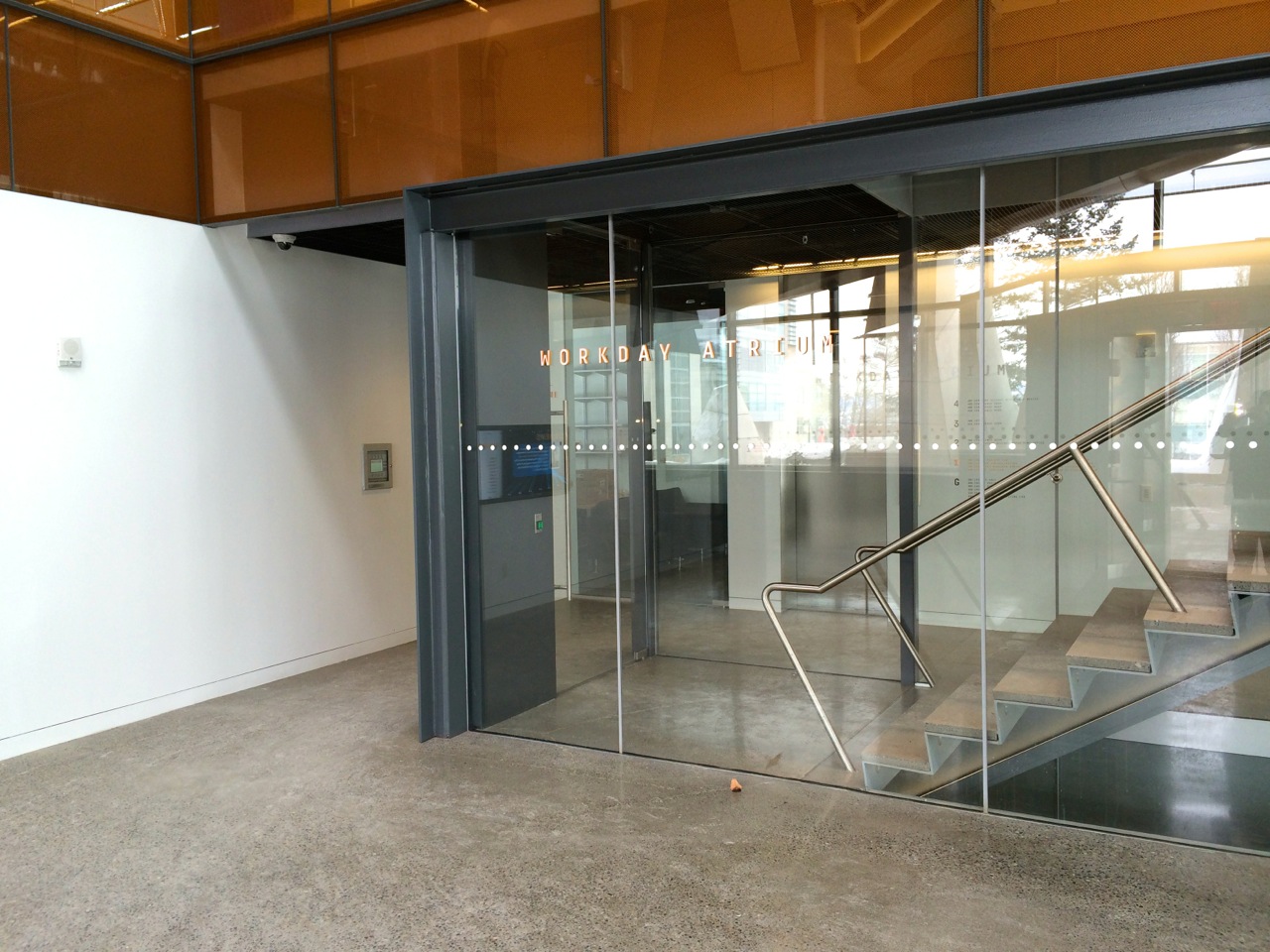
Cornell’s Gates Hall is just about complete, and move-ins for the Information Science Department have begun for faculty, staff, and a few classrooms/workspaces are set up. It’s pretty wild on the inside, and the entryway cantilever provides an interesting preview of that (plus, when the weather is nicer, I think it would provide a nice assembly space). The lobby features semi-transparent glass, through which you can see the stairs up to each level, and clear glass panels for glimpses of each floor.
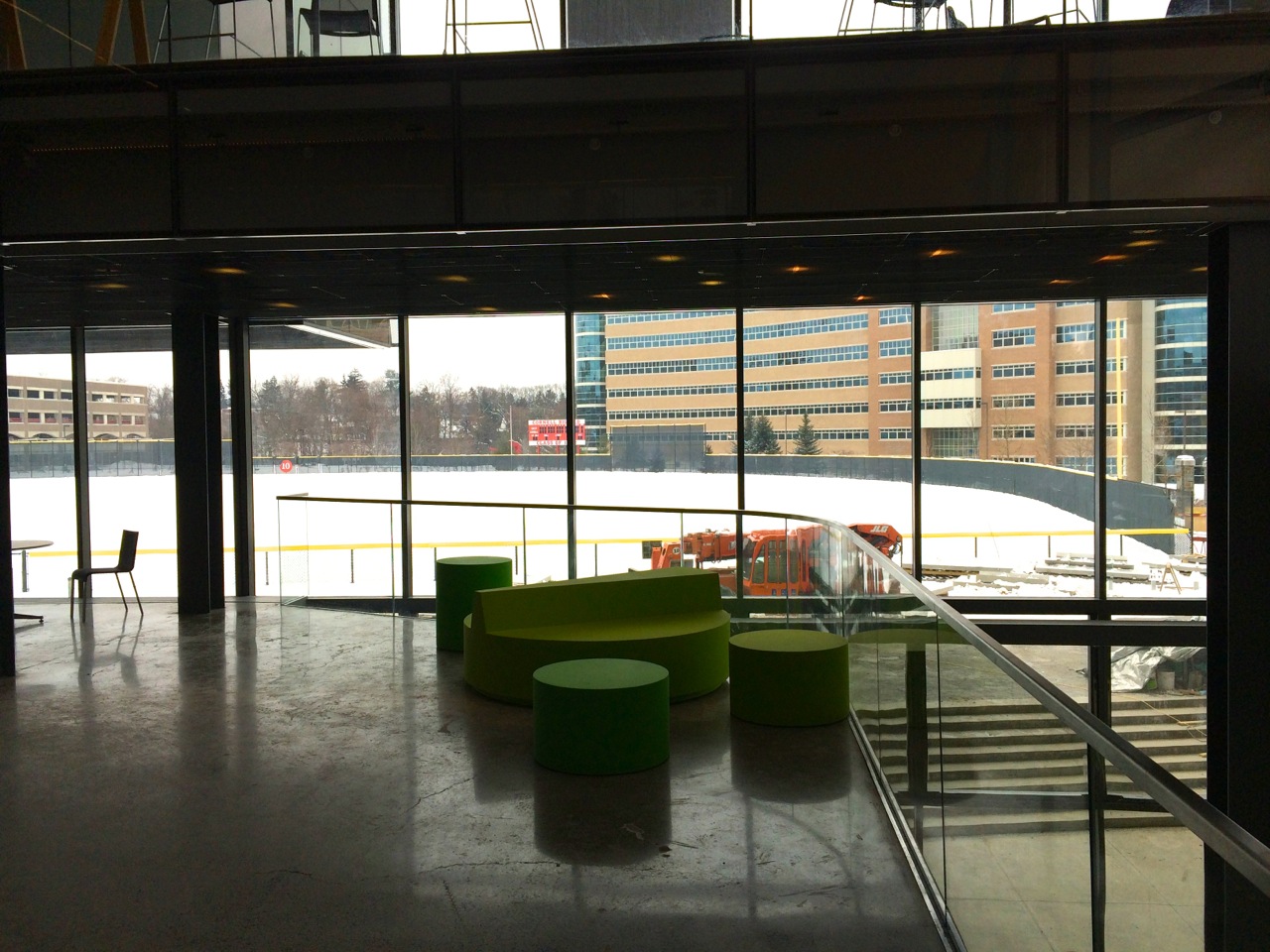
Many of the rooms are still being put together, but much of the common area furniture is already setup for use. Besides the concrete features on the outside, I didn’t see any finishes on the inside that aren’t completed, although I bet there’s much work to be done moving everything over, hooking up computers and networks, etc. Moving an entire department must be challenging. Floors are concrete, much like Milstein Hall, and there’s a bold amount of glass and steel everywhere. I’ll surely be coming back soon to explore much more- especially to walk around on the transparent floor at the end of the cantilever- vertigo anyone?
Carey Building III: Demolition Photos
February 10, 2014 // by Jason Henderson
Just a fun little pack of demolition photos here from the Carey Building project, the future home of the business incubator space, a joint effort by Cornell University, Ithaca College, and Tompkins Cortland Community College.
Interior demolition work is being done by Compass Builders, and after a couple weeks, they should have all the interior walls down, along with the plaster ceiling. The walls are a combination of metal studs with sheetrock facing and sprayed-in cellulose cavity fill, along with original walls, which were built with cellular gypsum block coated in plaster, but also cinder block and terra cotta block. The original plaster ceiling is quite heavy, containing a layer of plaster coating on top of metal lath, then another thick coat of plaster, and then ceiling tiles glued underneath, all hanging from heavy metal hangers attached to the ceiling deck.
Sparks Electric Company started last week, demoing and capping electric lines for the wall and ceiling demo to proceed safely, and HALCO took care of the old cooling system ductwork today, as well as capping a few water supply lines that will be in the way of wall demo.
Collegetown Terrace Photo Update: January to Early February
February 10, 2014 // by Jason Henderson
Here are some shots of the Novarr-Mackesey Collegetown Terrace Project taken this past Sunday- I last visited in late December. Building 5 has been fully framed, sheathed, and windows have been installed up to the final fifth level, with just a bit more sheathing work to be done on the western end and also the stair tower on the eastern end (which is used for loading-in materials anyway). Building 6 has nearly completed weather wrap installation, and the facade panels are coming along, which began at the top level. The pre-fabricated rectangular steel piece for the elevated walkway towards the center of Building 5’s northern face (the glass-covered common area) has been lifted and secured into place, providing a path from Building 5 to Building 3.4, at the south side of the entry pavilion. From what I can see on the outside through the glass, the work within the units themselves has been progressing well, and even in this cold, the amount of exterior work in the past month is impressive. From the shot of Building 5’s southern face, you can also see the opening for the future elevated walkway from Building 5 to Building 7, which will be the last, largest, and longest building in the project (and it looks as if the retaining wall has already been poured).
The apartment development has a cool new website you can check out, with a bunch of new photos, and floor plans images for each individual floor layout.
Building 5 southern face, at western end:

Building 5 northern face, at eastern end:

Planned Parenthood Photo Update: Brick Facade
February 9, 2014 // by Jason Henderson
Sections of the Planned Parenthood (of the Southern Finger Lakes) Ithaca project’s facade have been filled-in with brick as called for in the design by Chiang O’Brien Architects. The majority of the work is moving along in the 16,000 square foot interior, which was closed-up by early December, along with the sealing of the bright green glass-mat sheathing covering over the exterior stud walls. Besides brick, much of the building will be covered with various styles of fiber cement panels, as shown in the plans below. LeChase Construction is the general contractor on the project, which should be finishing up later this year.